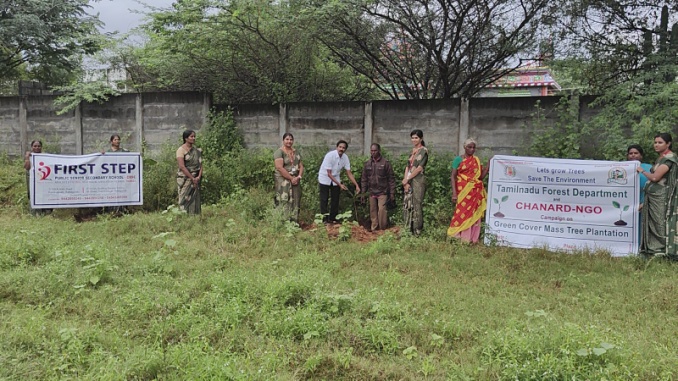
Tree plantation plays a vital role in addressing key environmental challenges such as deforestation, soil erosion, desertification in semi-arid areas, and the growing impact of global warming. Trees act as natural carbon sinks, absorbing harmful gases—especially carbon dioxide (CO₂)—and releasing oxygen, which enhances air quality and supports healthier ecosystems. In addition, they help regulate atmospheric temperatures, mitigate urban heat, reduce surface runoff, and protect against land degradation.
CHANARD’s Tree Plantation Initiative is rooted in the belief that planting trees today is an investment in the planet's future. Our objectives are clear and community-driven:
• Establish green belts and avenue plantations to meet the aesthetic and recreational needs of the people
• Beautify rural and semi-urban areas by enhancing scenic value
• Prevent soil erosion and control surface runoff, especially along embankments and marginal lands
• Regulate local climate by reducing temperatures and increasing humidity
As part of our ongoing environmental mission, CHANARD has actively implemented mass tree plantation drives in the drylands of marginal farmers. Conservation of natural resources remains one of our core goals. Each year, we mobilize a diverse coalition of stakeholders including CHANARD’s NGO network, school children, Block Development Officers, and officials from the Forest and Agriculture Departments. These collective efforts culminate in large-scale tree plantation campaigns across villages and schools in Dindigul and Theni districts.
In the current financial year, just ahead of the monsoon, CHANARD undertook a significant plantation campaign, planting over 35, 000 saplings comprising a wide variety of native species. This ambitious drive took place in Kanavaipatty , Semettupatti , Kamakapatti and Viralipatty , and was proudly conducted on October 15th, commemorating the birthday of Dr. A.P.J. Abdul Kalam, a visionary leader and advocate of sustainable development.
Through these efforts, CHANARD continues to foster ecological restoration, climate resilience, and community participation, empowering future generations to take pride in nurturing and protecting the environment.